
How Investor and Airbnb Demand Is Reshaping Norman’s Miller Historic District Home Sales
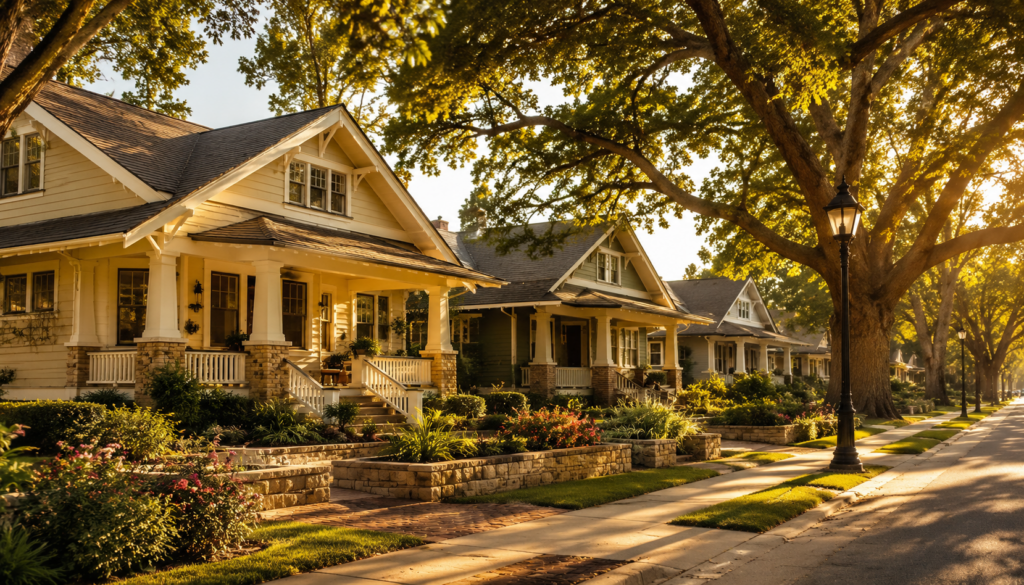
Is investor and short-term rental demand pushing up competition for historic homes near OU, and should you market your Miller or Larsh/Miller home differently because of that?
Yes. Investor and short-term rental buyer interest is actively reshaping how Miller Historic District and Larsh/Miller homes compete in Norman’s market. If you are selling in these neighborhoods, marketing to both owner-occupants and investor-buyers can expand your buyer pool and drive stronger offers.
Why This Matters Right Now in Norman’s Historic Neighborhoods
I am seeing something shift in real time near the University of Oklahoma campus. The buyers walking through open houses in the Miller Historic District and along Larsh/Miller streets are no longer just young families charmed by 1920s Craftsman bungalows. They are professors with exit strategies, out-of-state investors running the rental numbers on their phones, and entrepreneurial couples calculating game-day revenue before they even look at the kitchen.
I recently helped a family relocating from out of town purchase a home close to the OU campus. The buyer is a professor at OU moving to Norman to teach for the next two years. After his teaching commitment is completed, the plan is to convert the property into a short-term rental home. This is not an unusual scenario anymore; it is becoming the playbook. And if you own a home in the Miller or Larsh/Miller area, this trend directly impacts how much your property is worth and who you should be marketing it to.
Who Is Competing for Your Miller District or Larsh/Miller Home in Norman
Understanding your buyer pool is the first step to pricing and marketing correctly. In my 10 years of helping sellers, investors, and relocating buyers across Norman, Moore, and Oklahoma City, I have watched the composition of buyers in these OU-adjacent historic neighborhoods change dramatically.
The Traditional Owner-Occupant
These are families, OU staff, and professionals drawn to the tree-lined sidewalks along Classen Avenue, the proximity to Reaves Park’s 79 acres of green space, and schools like McKinley Elementary with its A Niche grade and 14:1 student-teacher ratio. They want character, walkability to Campus Corner, and the charm of architecture built between 1910 and 1938.
The Investor-Occupant Hybrid
This is the fastest-growing segment. Think of my professor client: he purchased near campus planning to live there during his two-year appointment, then convert the home to a short-term rental. Oklahoma’s pro-landlord regulatory environment and rental yields averaging 8 to 12 percent across various property types make this strategy extremely attractive. With OU experiencing five consecutive years of enrollment growth and over 26,000 students needing off-campus housing, the demand fundamentals are rock solid.
The Pure Short-Term Rental Investor
These buyers are evaluating your Miller District bungalow based on game-day weekend revenue, graduation bookings, and academic conference traffic. Norman hosts six to seven Sooners home football games per year, and historic homes near campus command premium nightly rates. Some campus-area properties even feature detached garages with studio apartments above, creating dual-income opportunities that pure investors love.
What does this mean for you as a seller? It means your home has appeal to at least two, possibly three, distinct buyer types, and your marketing strategy needs to speak to all of them.
How Norman’s Current Market Data Supports a Dual-Marketing Strategy
Let me put some numbers behind this. Norman’s median sale price sits at $281,000, though prices were down 2.3 percent compared to last year. The broader market has shifted with 821 homes available as of late 2025, a 67.6 percent increase in inventory year over year, and months of supply climbing to 7.3.
But here is what I tell my clients who own in the Miller Historic District or Larsh/Miller: your neighborhood is not the broader market. These historic pockets near OU operate as micro-markets where investor competition can remain fierce even as Norman’s overall inventory loosens. The median home price in the immediate OU neighborhood sits around $163,000 for more modest properties, but restored Craftsman bungalows in the protected Miller Historic District trade at significant premiums, often landing in the $300,000 to $450,000 range for larger three- and four-bedroom homes.
Norman’s vacancy rate of approximately 4.5 percent, combined with average rents around $957 per month growing at 2.9 percent annually, makes the rental income story compelling for any buyer who sees your home as a future investment. Since 2016, Norman’s median home price has appreciated 43 percent, giving investors confidence in long-term equity growth alongside rental cash flow.
Why You Should Market Your Miller or Larsh/Miller Home to Both Buyer Pools
One seller I worked with in a similar OU-adjacent historic area initially wanted to market exclusively to families. The listing highlighted original hardwood floors, the wrap-around porch, and proximity to McKinley Elementary. After three weeks with moderate interest, we expanded the marketing to emphasize rental yield potential, the property’s walkability to Campus Corner, and its proximity to the stadium. Within 10 days, two competing offers came in: one from a young couple who fell in love with the Craftsman details, and one from an investor group calculating short-term rental revenue. The seller ultimately accepted an offer above asking price.
Here is how you should think about positioning your home:
- Lifestyle Marketing: Highlight the Miller District’s architectural significance, the Bungalow and Craftsman details, mature pecan-shaded sidewalks, walkability to Campus Corner (Othello’s Italian, the Campus Corner Store), and the 79-acre Reaves Park with its sports fields and castle-themed playground
- Investment Marketing: Lead with Norman’s rental yields and vacancy rates, the 8 to 12 percent rental yield range across Oklahoma property types, OU’s five consecutive years of enrollment growth, and game-day rental demand during Sooners football season
- Dual-Use Marketing: Feature properties with accessory dwelling units or detached garage studios, which appeal to both families wanting guest space and investors wanting multiple income streams
Having closed over 152 transactions across this metro area, I can tell you that the sellers who capture the highest sale prices in the Miller Historic District are the ones who let their homes speak to both the heart and the spreadsheet.
What Norman’s Short-Term Rental Regulations Mean for Your Sale
Before you market rental potential, you need to understand the regulatory landscape. Oklahoma maintains a generally pro-landlord regulatory environment, which makes the state particularly appealing to out-of-state and institutional investors. However, Norman’s Historic District Commission does impose renovation and modification guidelines within the Miller Historic District overlay.
This is actually a selling point, not a limitation. The historic overlay protections preserve the architectural character that makes these homes command premiums in the first place. An investor cannot purchase a Craftsman bungalow on Classen Avenue and convert it into something unrecognizable. That protection stabilizes property values for every homeowner in the neighborhood.
What I tell my clients is this: when you market the historic designation, frame it as built-in value protection. Investors appreciate knowing that neighboring properties cannot be demolished or dramatically altered, because that stability supports their long-term rental revenue projections.
Timing Your Miller Historic District Home Sale for Maximum Impact
If you are considering selling your Miller or Larsh/Miller home, timing matters more than in most Norman neighborhoods because of the university calendar. The strongest buyer activity from relocating faculty and staff typically peaks between March and June, when new appointments are confirmed for the coming academic year.
My professor client, for example, began his home search in the spring before his fall teaching start date. Families with school-age children also target this window to settle in before McKinley Elementary or Norman High School (A Niche grade, 20:1 student-teacher ratio) starts the new year.
Investor interest, meanwhile, often spikes in late summer and early fall as short-term rental operators position for football season revenue. Listing your home so that it hits the market during the overlap of these two demand windows, roughly April through July, can generate the most competitive offers.
With 29 five-star reviews and recognition as a Top 500 Real Producer, I have navigated this seasonal dynamic for sellers across Norman, Moore, and Oklahoma City. The difference between a well-timed listing and a poorly timed one in these micro-markets can be tens of thousands of dollars.
Frequently Asked Questions
Is investor demand actually increasing for homes in the Miller Historic District in Norman?
Yes. Oklahoma’s affordable entry prices, strong rental yields of 8 to 12 percent, and OU’s five consecutive years of enrollment growth are drawing both local and out-of-state investors to campus-adjacent historic neighborhoods. The Miller District’s protected character and walkability to OU make it particularly attractive for short-term rental conversion strategies.
Should I market my Larsh/Miller home differently than a typical Norman listing?
Absolutely. Your Larsh/Miller home appeals to both lifestyle buyers and investment buyers. A dual-marketing approach highlighting Craftsman architectural details alongside rental income potential will expose your property to the widest and most motivated buyer pool.
How do short-term rental regulations in Norman affect my home’s value?
Norman’s pro-landlord environment and historic overlay protections actually support your home’s value. The overlay prevents incompatible renovations, stabilizing neighborhood character, while Oklahoma’s landlord-friendly regulations attract investors willing to pay premiums for rental-ready properties.
What type of buyer is most likely to purchase my Miller Historic District home?
You are likely to attract a blend of owner-occupants drawn to historic charm and proximity to OU, hybrid buyer-investors planning to live in the home before converting it to a rental, and pure investors focused on short-term rental revenue during football season, graduation, and university events.
How does OU enrollment growth affect home prices near campus?
OU’s enrollment of over 26,000 students creates consistent demand for off-campus housing. Norman’s vacancy rate of approximately 4.5 percent and average rent growth of 2.9 percent annually demonstrate the sustained pressure this enrollment places on housing supply near campus.
Are cash offers from investors common in these Norman neighborhoods?
Investors frequently submit cash offers in the Miller and Larsh/Miller areas. As a seller, this can actually benefit you because cash offers typically close faster with fewer contingencies. I help my sellers evaluate whether a slightly lower cash offer might net more after factoring in speed and certainty of closing.
What rental income can a Miller District home generate as a short-term rental?
While income varies by property size, condition, and season, Norman sees massive short-term rental demand during Sooners football weekends, OU graduation, parents’ weekends, and academic conferences. Properties with multiple bedrooms or accessory dwelling units generate the strongest returns.
Does the historic designation limit what an investor can do to my home after purchase?
The Norman Historic District Commission does impose guidelines on exterior modifications within the Miller Historic District, but interior renovations are generally more flexible. This protects neighborhood character and long-term property values, which most savvy investors view as a positive.
How long are Miller Historic District homes staying on the market in 2026?
Norman’s overall market conditions have shifted significantly, with broader inventory growing and market dynamics changing. Historic homes near OU that are competitively priced and marketed to both buyer pools tend to move quickly because they attract overlapping demand.
What is the best time of year to sell a home in the Larsh/Miller area of Norman?
The sweet spot is April through July, when relocating OU faculty and families are searching simultaneously with investors positioning for fall football season revenue. Listing during this overlap window maximizes competitive pressure on your home.
The Bottom Line – How Investor and Airbnb Demand Is Reshaping Norman’s Miller Historic District Home Sales
If you own a home in Norman’s Miller Historic District or the Larsh/Miller neighborhood, you are sitting on a property that appeals to more buyer types than almost any other home in the metro. Investor and short-term rental demand is real, growing, and directly driven by OU’s campus proximity and Oklahoma’s favorable investment climate. The sellers who come out ahead are the ones who market to both the family dreaming about Craftsman charm and the investor calculating game-day revenue. That takes a strategy built on local expertise, not a generic listing approach. I am Daniella Miller with Real Brokerage, and with 10 years of experience, 152 closed transactions, and a GRI certification, I help Norman sellers navigate exactly this kind of nuanced market. If you are considering a sale in Miller or Larsh/Miller, contact me so we can build a plan that captures every dollar your historic home is worth.