
Relocating to Oklahoma City for Work: Jobs, Housing, and Commute Times
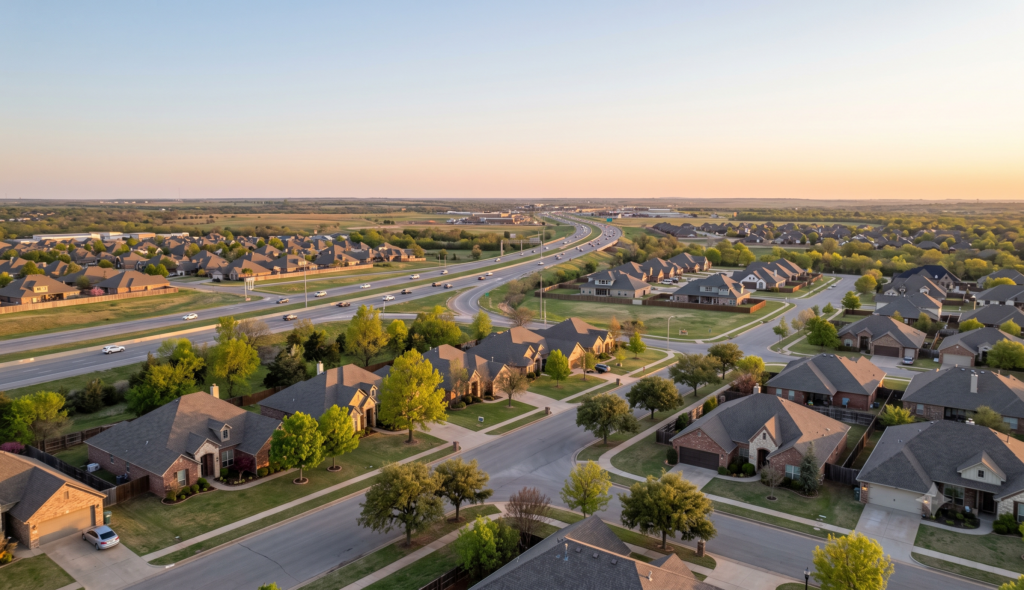
Thinking about relocating to Oklahoma City for a new job? Here’s what you need to know about housing costs, commute corridors, and the best neighborhoods in Norman, Moore, and OKC.
[SNIPPET ANSWER: Oklahoma City offers median home prices around $259,000, commutes under 35 minutes across the metro, and a diversified job market in energy, aerospace, healthcare, and tech, making it one of the most affordable relocation destinations in the country.]
Why Relocating to Oklahoma City Makes Sense Right Now
If you’re reading this, you’ve probably just accepted a job offer, started interviewing, or been told your company is transferring you to the Oklahoma City metro. First, congratulations. Second, take a breath, because you’re about to discover that your money goes a lot further here than you might expect.
I’m Daniella Miller with Real Broker LLC, and I’ve spent 10 years helping people relocate to the Oklahoma City metro. Having closed over 170 transactions and earned 33 five-star reviews from past clients, I can tell you that the most common reaction I hear from out-of-state buyers is genuine shock at what they can afford. OKC ranked among the top metros for net inbound migration in both 2024 and 2025, and that’s not a coincidence. The combination of low traffic, a vibrant downtown anchored by Bricktown and the Midtown Arts District, a food scene that punches well above its weight, and home prices that genuinely don’t make sense compared to other cities keeps drawing people in.
The question isn’t whether Oklahoma City is affordable. The question is which neighborhood fits your life, your commute, and your long-term goals. Let me walk you through exactly that.
Oklahoma City Metro Job Market: Where the Opportunities Are
You’re probably relocating for a specific employer, but understanding the broader job landscape matters because it tells you about your neighborhood options and long-term stability.
The Oklahoma City metro’s economy is built on several pillars, not just one. Energy remains a foundation, but aerospace and defense (anchored by Tinker Air Force Base, one of the state’s largest employers), healthcare systems across the metro, a growing technology sector, government employment at the state capital, and higher education at the University of Oklahoma in Norman all contribute to a diversified base. Norman specifically is powered by weather research institutions like the National Weather Center and NOAA facilities, aviation engineering hubs, and major healthcare centers.
What does this mean for you practically? It means your home’s value isn’t tied to a single industry’s fortunes. One couple I recently helped relocated from Houston after years of watching their neighborhood’s values swing with oil prices. They chose Moore specifically because the area’s buyer demand comes from Tinker AFB employees, state workers, healthcare professionals, and small business owners, not just one sector. That kind of diversification is what keeps a housing market stable.
Oklahoma’s unemployment rate remains low, and the state’s median household income continues to support homeownership at levels that feel genuinely accessible compared to what you’re probably used to.
Housing Costs in Norman, Moore, and Oklahoma City: A Neighborhood Breakdown
This is where things get interesting, because prices vary dramatically depending on where you plant your flag. Let me break down each city so you can make an informed decision.
Oklahoma City Proper
The median home price in Oklahoma City sits around $259,000, essentially flat year-over-year. You’ll find everything from historic bungalows near the Paseo Arts District to modern condos in Midtown to suburban family homes with generous lots. Homes are currently sitting on the market for about 64 days, and there’s a 4.6-month supply of inventory, which means you have time to shop carefully without feeling panicked.
Norman: College Town with Serious Depth
Norman is where I’m based, and I can tell you it’s one of the most underrated cities in the state. The median listing price is around $359,950, but the median sold price comes in at $294,950, which tells you there’s negotiating room. Here’s the real range by neighborhood:
- Campus Corner and OU-adjacent areas: Entry-level condos from $114,000 to $175,000
- Northeast Norman (near 12th Ave NE and Constitution Street): $230,000 to $290,000 for family-friendly subdivisions
- Northwest Norman (near Indian Hills Road and Tecumseh Road): $330,000 to $480,000 for newer, premium construction with energy-efficient smart home features
- Southeast Norman (near 120th Ave SE and Alameda): Modern stucco-and-brick homes around $256,000
Norman’s inventory has grown 67.6% year-over-year, and months of supply climbed from 4.5 to 7.3. What I tell my clients is that this kind of market is genuinely rare for buyers. You have selection and leverage.
Moore: The Value Sweet Spot
Moore’s median sale price falls between $230,000 and $240,000, which is 17% below the national average. If you’re working at Tinker AFB, in South Oklahoma City, or anywhere along the I-35 corridor, Moore delivers the best commute-to-value ratio in the metro. Values have appreciated about 1.8% year-over-year, so you’re still building equity without overpaying.
Commute Times Across the Oklahoma City Metro
Ready for some good news? If you’re coming from a city where a 45-minute commute is considered short, Oklahoma City is going to feel like a gift.
Here are the key commute corridors you need to know:
Norman to Downtown OKC: 25 to 35 minutes via I-35 (roughly 20 miles)
Moore to Downtown OKC: 15 to 25 minutes via I-35 (roughly 12 miles)
Moore to Tinker AFB: 15 to 20 minutes via I-240 and I-35
Norman to Tinker AFB: 25 to 30 minutes
Norman to Moore: 10 to 15 minutes via I-35
The I-35 corridor is the spine that connects all three cities, and it makes the Norman-Moore-OKC triangle one of the most commutable metro areas in the country. A first-time buyer I worked with last year relocated from the Dallas area for a position at the National Weather Center in Norman. She was budgeting 45 to 60 minutes for her daily commute because that was her reality in Texas. When she realized her drive from her new home near Reaves Park in Norman to work was eight minutes, she actually laughed. That kind of quality-of-life upgrade is hard to put a price on.
Pros and Cons of Relocating to Oklahoma City
I believe in giving you the full picture, not just the highlight reel. After helping buyers relocate here for a decade, here are the honest pros and cons.
The Pros
Affordability that changes your financial life. The average home value in Oklahoma is about $214,000, dramatically below most major metros
Low property taxes. Oklahoma’s average property tax rate is 0.89%, placing it squarely in the middle of U.S. states
Short commutes. Most cross-metro commutes clock under 35 minutes
Diversified economy. Your home value isn’t hostage to one industry
Growing food and culture scene. Spots like Scratch Kitchen and Cocktails in Norman (95 E Main St) and Benvenuti’s Ristorante (18 S Peters Ave) showcase genuine culinary depth
Outdoor access. Lake Thunderbird State Park offers over 6,000 acres of fishing, hiking, and kayaking right in Norman
The Cons
Tornado season is real. Oklahoma averages 62 tornadoes annually, with peak season from April through June. This impacts insurance costs and construction standards. I always advise my clients to budget for storm shelters and to understand their insurance coverage thoroughly before closing
Car-dependent living. Outside OU’s Campus Corner area (Walk Score of 72), most suburbs score 28 to 45 for walkability. You will need a car
Summer heat. Temperatures regularly exceed 100 degrees from June through August. If you’re coming from a milder climate, this takes adjustment
Limited public transit. Norman’s CART system and OKC’s bus routes exist, but they’re limited in frequency and coverage
Smart Strategies for Out-of-State Buyers in Oklahoma City
As a GRI-certified agent and military relocation specialist who has earned Double Gold awards in 2024 and Gold awards in 2025, I’ve developed a specific approach for out-of-state buyers that I want to share with you.
Mortgage rates have stabilized around the 6% range. Instead of waiting for rates to drop, many of my successful relocation clients use strategies like buying now and refinancing later, negotiating seller concessions for rate buydowns (sellers in this balanced market are more willing than you might think), or exploring new construction incentives. Builders across Moore, Norman, and the broader OKC metro are actively offering rate buydowns and closing cost assistance.
If you’re considering renting before buying, know that average rents are projected between $1,065 and $1,100 per month for a one-bedroom and $1,250 to $1,290 for a two-bedroom. In Norman, the average rent is around $957 per month. When you run the math, buying often makes more financial sense within the first year.
Also, do not overlook down payment assistance programs. OHFA offers up to 3.5% down payment assistance through their Dream and 4Teacher programs. Several Norman ZIP codes (73071 and 73072) qualify for USDA zero-down loans, which is one of the most underused tools I see for Norman buyers relocating from out of state.
Schools You Should Know in Norman, Moore, and Oklahoma City
If you have children, schools will likely drive your neighborhood decision. Norman hosts 29 public schools with strong STEM programming and a range of learning models including project-based alternatives. Norman North High School (1809 Stubbeman Ave) holds a GreatSchools rating of 7 out of 10, known for strong AP programs, while Norman High School (101 E Acres St) carries a rating of 6 out of 10 with a rich academic tradition. Jefferson Elementary in central and west Norman scores an 8 out of 10 with strong STEM programming. Dimensions Academy, Norman’s charter option, also scores 8 out of 10 and is particularly popular with OU faculty families for its project-based learning model.
Moore’s school district also serves families well, particularly for buyers near the I-35 corridor who want solid schools paired with lower price points.
Frequently Asked Questions About Relocating to Oklahoma City
What is the median home price in Oklahoma City in 2026?
The median home price in Oklahoma City is approximately $259,000, which is essentially flat year-over-year. This figure is significantly below the national median, making OKC one of the most affordable major metros for relocating buyers. Moore comes in even lower at $230,000 to $240,000, while Norman ranges from $256,000 in Southeast Norman to $480,000 in Northwest Norman’s premium neighborhoods.
How long is the commute from Norman to Downtown Oklahoma City?
The commute from Norman to Downtown OKC typically takes 25 to 35 minutes via I-35, covering approximately 20 miles. From Moore to Downtown, you’re looking at just 15 to 25 minutes. By major metro standards, these are short, predictable commutes without the gridlock you’d experience in larger cities.
What industries drive jobs in Oklahoma City?
Oklahoma City’s economy is diversified across energy, aerospace and defense (Tinker Air Force Base), healthcare, technology, state government, higher education (University of Oklahoma in Norman), and weather research. This diversification provides stability that single-industry cities simply cannot match, and it supports consistent housing demand across the metro.
Is Oklahoma City a good place for first-time homebuyers?
Absolutely. With median prices well below the national average, property tax rates around 0.89%, and programs like OHFA offering up to 3.5% down payment assistance, the Oklahoma City metro is one of the most accessible markets in the country for first-time buyers. Several Norman ZIP codes even qualify for USDA zero-down financing.
What are the property tax rates in Oklahoma?
Oklahoma’s average property tax rate is 0.89%, which places it right in the middle of state property tax rates nationally. Rates vary depending on your home’s value and specific location within the metro, but overall, property taxes here are reasonable compared to states like Texas or New Jersey.
When is tornado season in Oklahoma City?
Peak tornado season runs from April through June. Oklahoma averages 62 tornadoes annually, so this is a real consideration. Most newer homes in Moore and Norman are built to updated construction standards, and many include storm shelters. I always recommend budgeting for a shelter if the home doesn’t already have one.
Should I rent first or buy immediately when relocating to Oklahoma City?
With average Norman rents around $957 per month and one-bedrooms in OKC projected at $1,065 to $1,100, the rent-versus-buy math often favors purchasing within the first year. That said, if your timeline is compressed and you need time to explore neighborhoods, a short-term rental can be a smart bridge. I help relocation clients map out both options.
What is the best neighborhood in Norman for families?
Northeast Norman, near 12th Ave NE and Constitution Street, is one of the most popular family areas. Homes range from $230,000 to $290,000, and the area feeds into some of Norman’s higher-rated schools. Northwest Norman offers newer, premium construction between $330,000 and $480,000 if your budget allows for upscale amenities and proximity to the research park.
Are there new construction options in the Oklahoma City metro?
Yes. Oklahoma City ended 2025 as one of the hottest new construction markets in the country. Builders across Moore, Norman, and the broader metro are expanding developments and offering incentives including rate buydowns and closing cost assistance. New construction is especially strong in the mid-range and premium segments.
How do I find a relocation specialist in Oklahoma City?
You want an agent who understands the specific needs of out-of-state buyers, from coordinating virtual tours to navigating down payment assistance programs to explaining insurance considerations unique to Oklahoma. With 10 years of relocation experience and a military relocation certification, I specialize in making this process seamless for buyers who can’t easily tour homes in person before moving.
The Bottom Line – Relocating to Oklahoma City for Work: Jobs, Housing, and Commute Times
Your decision to relocate to Oklahoma City is going to be shaped by three things: where you work, what you can afford, and how you want to live day-to-day. The data is clear. This metro offers housing costs dramatically below the national average, commutes that rarely exceed 35 minutes, a diversified job market, and a quality of life that consistently surprises newcomers.
Whether Moore’s value pricing near Tinker AFB, Norman’s university-town culture near Reaves Park and Lake Thunderbird, or Oklahoma City’s urban energy in Bricktown and Midtown fits your lifestyle, I can help you find the right home with confidence. I’m Daniella Miller with Real Broker LLC, based right here in Norman. You can reach me at 405-413-9802, and I’d love to help you make your move to Oklahoma a great one.